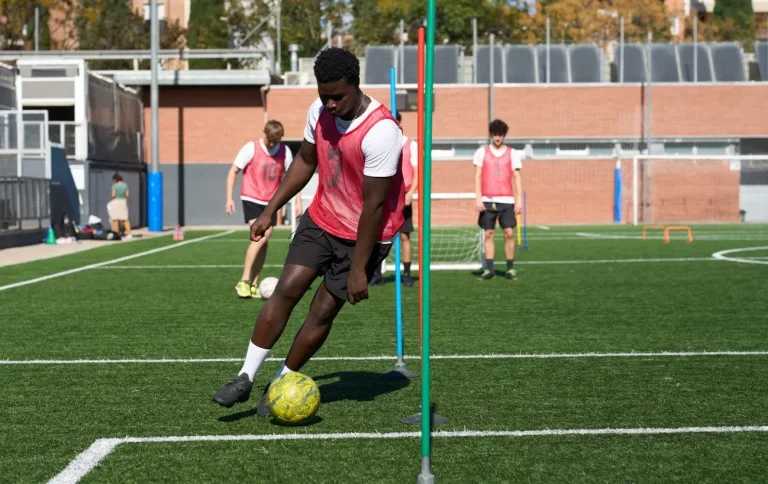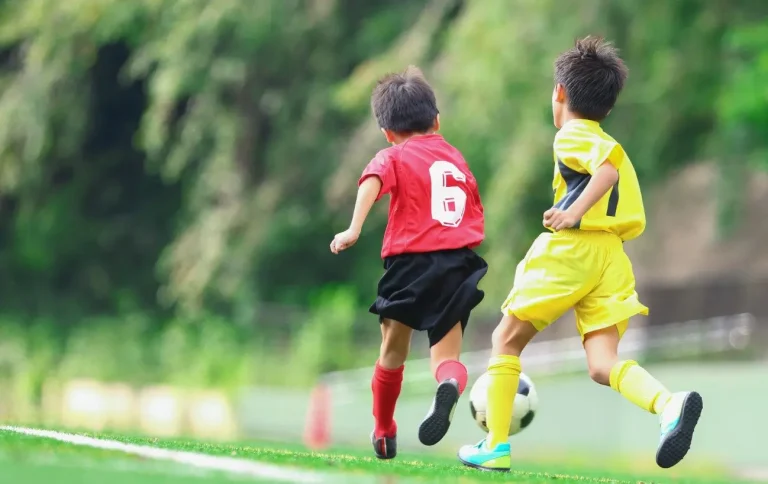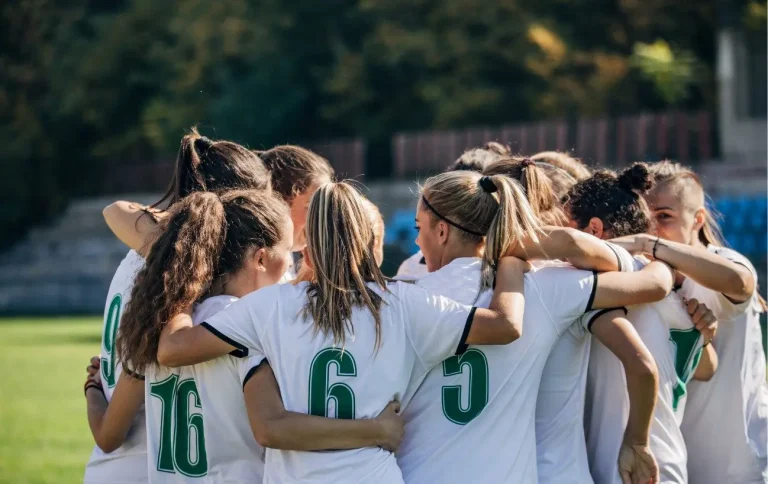
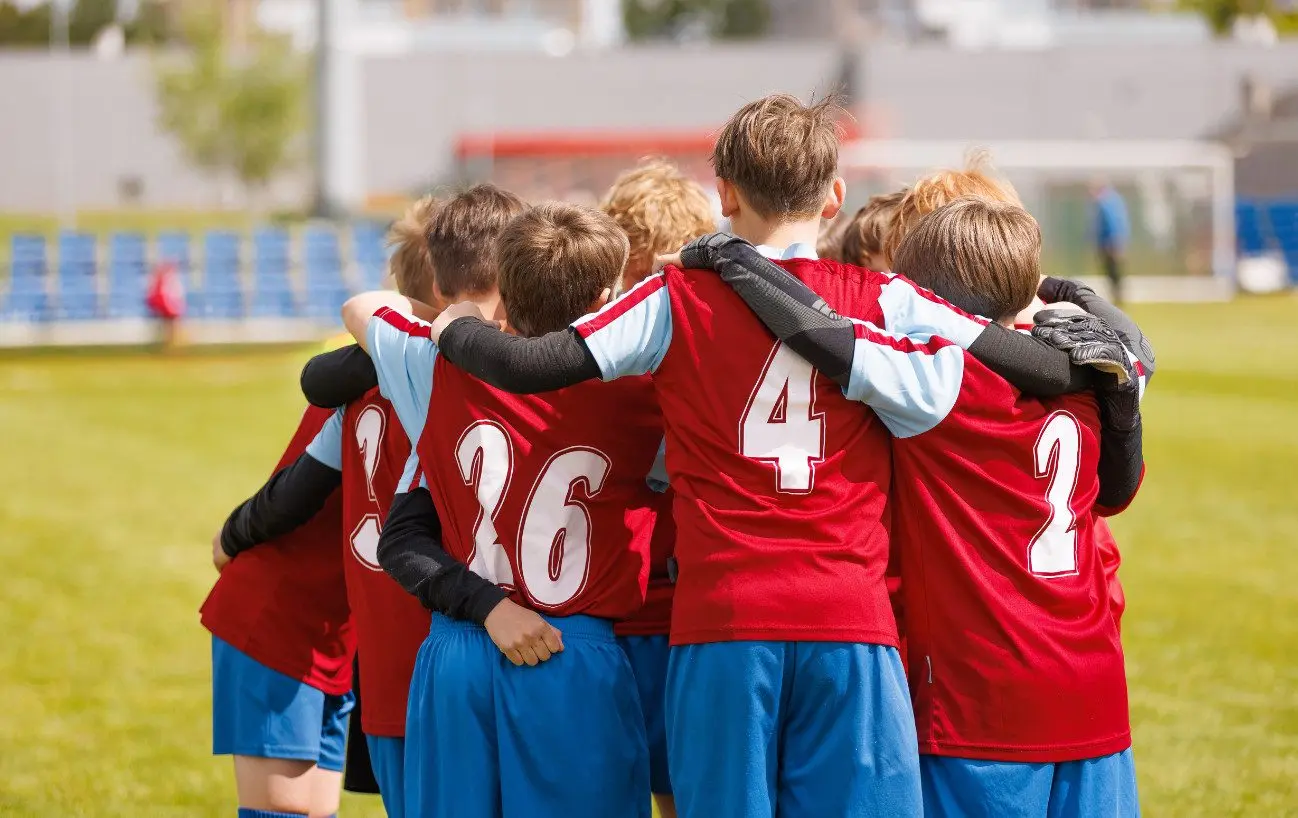
Training a young footballer is not only about improving their technique or physical condition. A key part of the development process is teaching game understanding in youth football, that is, helping them read situations, make better decisions, and understand how collective principles work.
The question is: how can this be done without making training rigid and boring? The key is to combine tactical learning with playful dynamics that keep motivation high.
📌 What is game understanding in young footballers?
Game understanding refers to a player’s ability to interpret what is happening on the pitch and act accordingly. It includes aspects such as:
- Identifying open spaces.
- Recognizing when to pass, dribble, or finish.
- Coordinating with teammates in attack and defense.
- Anticipating the opponent’s actions.
👉 In youth football, the goal is not to mechanize the player, but to develop their tactical intelligence naturally.
🎯 Benefits of working on game understanding from an early age
- Better decision-making in real-game situations.
- Development of creative and autonomous players.
- Greater ability to adapt to different playing systems.
- More organized teams without constantly repeating instructions.
- More engaging training, as children participate in dynamics similar to real games.
🏃 How to teach game understanding without losing fun
- Small-sided games with adapted rules
- Modify the number of players, field dimensions, or scoring conditions.
- Example: 3×3 where a goal only counts after an extra pass.
- Benefit: encourages ball circulation and cooperation.
- Tasks with decision-making
- Avoid repetitive exercises without opposition.
- Proposal: rondos where the player with the ball has multiple options.
- Result: the child learns to choose the best option in each context.
- Integrate questions and feedback
- Make players think during the task.
- Example: stop an exercise and ask, “What other options did you have?”
- This promotes tactical reflection, not just mechanical execution.
- Progressive challenges
- Introduce game principles gradually: first space occupation, then support play, and later pressing.
- Adapt difficulty according to the age and level of the group.
- Keep fun as the central focus
- Design tasks that are challenging but motivating.
- Include game dynamics, team challenges, and small internal tournaments.
📊 Examples of practical tasks
- “Moving gates” game: teams must pass through different marked zones before scoring. Enhances game vision and spatial occupation.
- Match with jokers: neutral players always play with the ball holder. Encourages creating numerical advantages.
- Attack by objectives: points are only awarded if the goal comes after a minimum number of passes. Encourages patience and ball circulation.
🚫 Common mistakes in tactical teaching for young players
- Mechanizing movements instead of fostering creativity.
- Overloading children with overly long explanations.
- Prioritizing immediate results over long-term development.
- Not adjusting the task level to the age and ability of the group.
Access now with a 25% discount. Simply apply the code: ZENITH25